

Brown Privilege in Stand-up Comedy
The advantages and costs of being South Asian on stage

By Ram Arangi
At first glance, stand-up comedy seems like the least South Asian career. In most desi families, careers rotate between doctor, engineer, and the occasional rebel who studies accounting.
Yet after six years on the comedy circuit, from basement open mics in Amsterdam to the legendary Comedy Store in London, I began to suspect certain parts of South Asian upbringing quietly prepare you for stand-up.
Stand-up is a strange line of work. If my father is reading this, he is probably rolling his eyes at the phrase “line of work.” There is no formal ladder, training programme or reliable pay. Unless you count the universal comedy club pay policy of two free drinks. In many ways stand-up is the opposite of the professional environments South Asians are encouraged to pursue. It is chaotic, uncertain, and largely self-constructed.
Yet my own experience suggests that many of the instincts I grew up with turned out to be surprisingly useful in navigating that chaos.
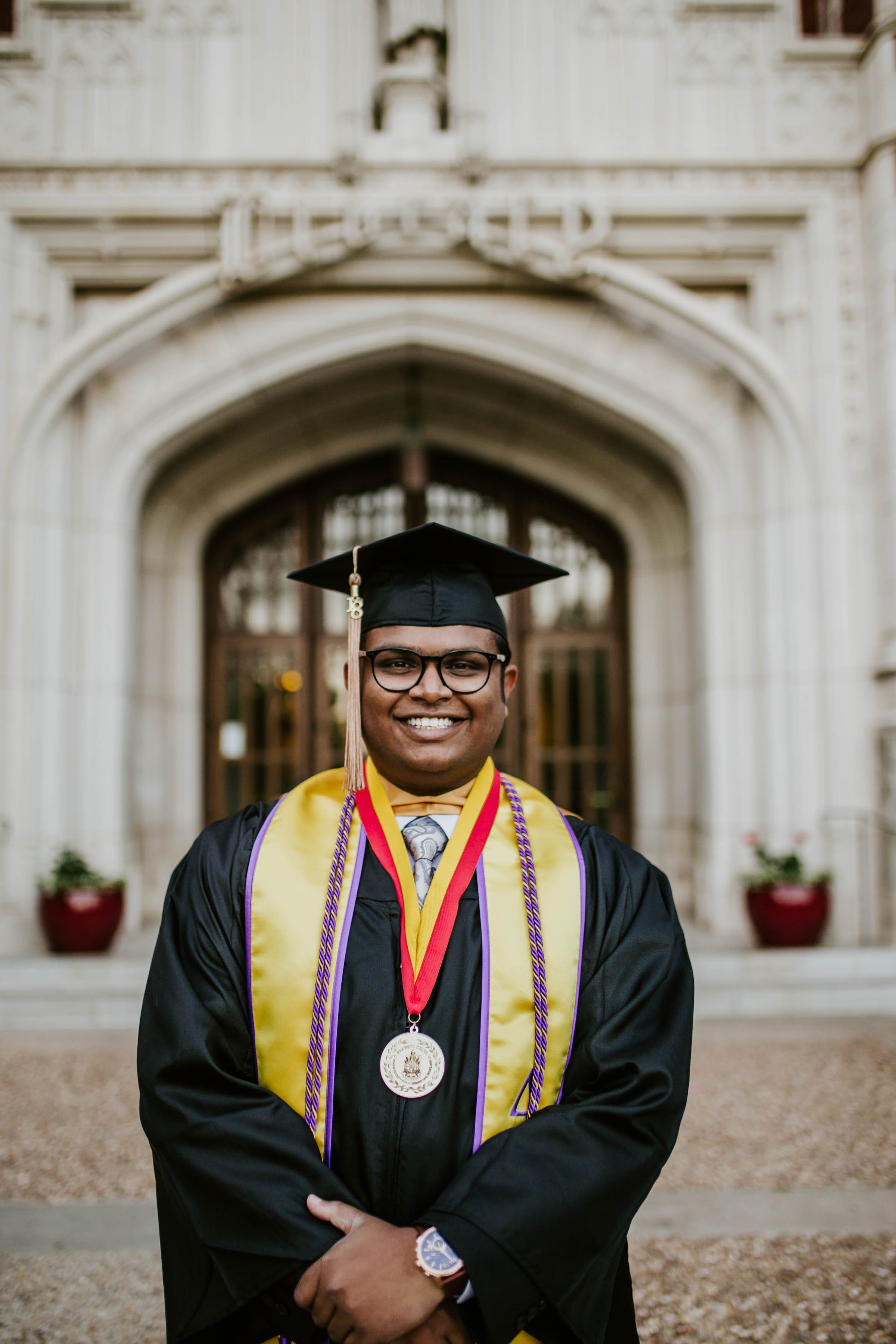
South Asians are often trained, intentionally or not, to juggle multiple responsibilities. While studying in the United States I completed a double bachelor’s degree, worked on a research fellowship, and built a startup. That pace prepared me for my current life. I spend my days working a corporate job and my nights performing stand-up shows or producing comedy events.
Europe’s comedy landscape in particular rewards that adaptability. Unlike the United States or the United Kingdom, continental Europe has no singular comedy industry. Each city functions as its own ecosystem. Languages change, audiences shift, and opportunities appear through informal networks.
For someone from India, this structure feels strangely familiar. Travel from Andhra Pradesh to Maharashtra and you encounter different languages, food, humour, and cultural rhythms. Growing up in that environment teaches you how to connect with people who think differently. That ability becomes invaluable when performing across European cities where audiences rarely share references.
Closely related to this is another ability many South Asians develop early. Code-switching. Most of us grow up adjusting how we speak depending on where we are. On stage, that flexibility becomes craft. Code-switching stops being survival and becomes performance. It allows me to connect with the Indian IT professional in the audience one moment and banter with a British immigration officer the next.
But perhaps my favourite South Asian survival skill is something we affectionately call “jugaad”. Jugaad is difficult to translate into English: it combines creativity, resourcefulness, and the refusal to accept that problems cannot be solved.
I once arrived two hours early for a show in Tallinn with my British Indian colleague Raul Kohli and discovered that the venue had mistakenly scheduled us for the following month. The comedy club was inside a hotel, and it was closed that night because the manager was out of town. Eighty tickets had already been sold. Instead of cancelling the show, I convinced the hotel staff to let us use the lobby by pointing out they could make bar revenue from eighty guests. We gathered chairs from across the hotel and built a makeshift comedy club.
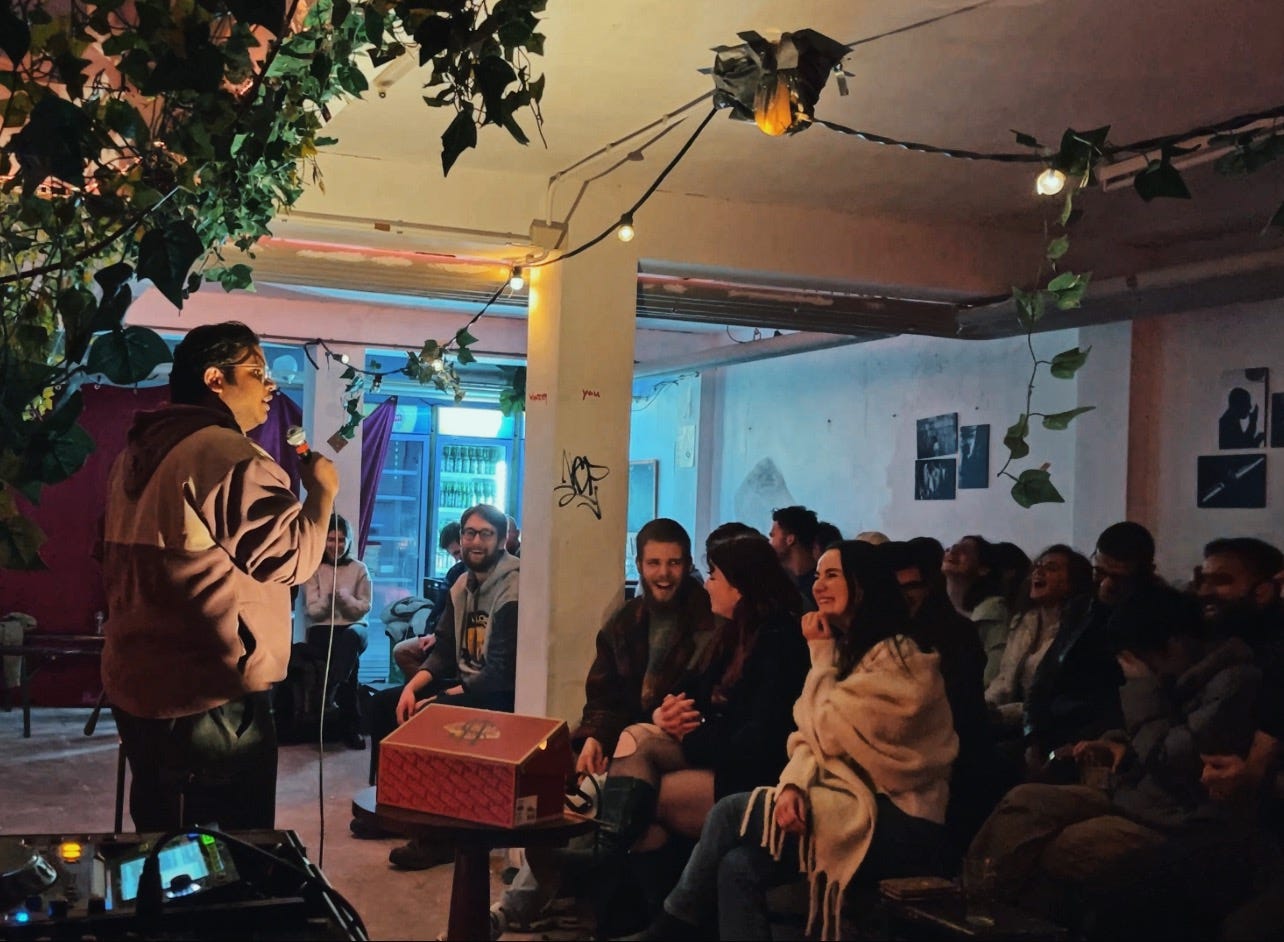
Then we realised we had no microphone or speaker. This is where Raul’s instincts kicked in. He somehow knows someone everywhere. “Who uses microphones all the time?” he said. “Politicians.” Raul tracked down a local politician he had met at the Edinburgh Fringe and managed to borrow their equipment. Two hours after discovering we had no venue, eighty people were sitting in a crowded hotel lobby watching a stand-up show. That is jugaad.
Stand-up comedy rewards another quality many South Asians understand well. Patience. Some of my jokes, particularly those about caste, took years before they started working consistently. In Europe, the challenge is often context rather than permission. As someone from a historically marginalised caste in India, the subject is familiar territory for me, though it may not be for my audience. I sometimes start by asking the crowd what the “C word” from India is. People shout things like curry or cow. I tease those answers and the awkwardness they create, and once the room is laughing, I introduce the third C word: caste. By then the audience is already engaged, which makes the conversation easier to navigate. Finding that balance takes time.
But my journey in comedy has not only been about using what my upbringing gave me. It has also required deciding what parts to leave behind.
One of the hardest habits to unlearn is the instinct to be universally liked. In many South Asian communities, including my own Telugu community, agreeability is rewarded. You are taught to respect authority, avoid discomfort, and protect the group’s reputation. Comedy operates differently. My favourite comedian Patrice O’Neal once said that a comedian is doing their job when half the room is laughing while the other half is horrified. Trying to please everyone usually produces jokes that please no one.
Another instinct that required adjustment was feeling overly grateful. Early in my career, even five minutes on stage felt like a privilege. Imposter syndrome before performing at a major comedy club may be natural, but remaining in that mindset can quietly limit you. It becomes harder to negotiate pay, push for better opportunities, or see yourself as someone who belongs on the stage. The shift from gratitude to ownership is crucial.
I realised how deeply these ideas were embedded in me at one pivotal moment in my career. I was scheduled to perform at the Comedy Store in London, which I once described to my father as the Harvard of comedy. Minutes before I was due to go on stage, I checked my phone backstage. It was a rejection. I had not received the promotion I had been hoping for.
Objectively this should not have been the moment to drift into corporate anxiety. I was about to perform in front of hundreds of people at a venue many comedians consider sacred. But the email triggered a familiar script. Growing up South Asian often means internalising a simple equation: professional recognition equals success.
For a moment that rejection overshadowed everything. Then I walked on stage. The room was full. The lights came up. The first joke landed. Within seconds something shifted. For the next twenty minutes, the hierarchy that had shaped so much of my thinking disappeared.
Comedy does not ask you to abandon where you come from. It asks you to examine it honestly. And being South Asian in the European comedy scene is not just about representation. It is about understanding the toolkit you arrive with: what will serve you and what needs to go. Sometimes that realisation arrives under bright lights in a packed theatre, in front of an audience that does not care about promotions or job titles. They only cared about one thing. Was I funny?
Ram Arangi is an Indian stand-up comedian and screenwriter based in Europe. Born in India and raised across five countries, his comedy blends personal storytelling with sharp cultural commentary. He has headlined comedy tours across Europe and has been featured on BBC Radio & Rolling Stone India.
 | A guest post by
|
Delighted to collaborate with Dvar Magazine for my first piece here. It’s a perspective I’ve been sitting with for a while…Dvar felt like the right place to dig deeper and share it. Thank you for the platform!🙏🏽